Writing Ad Copy
That Converts
The difference between ads that work and ads that waste budget comes down to four things: the headline, the body structure, the CTA, and knowing the platform you're writing for.
Headline Formulas
4 patterns that earn the next read
Headlines do one job: stop the scroll. Everything below is wasted if the headline doesn't earn the reader's next second. Four formulas, all battle-tested across platforms.
Number + Outcome
5 Deploy Tricks That Cut Downtime 80%
Discover Amazing Ways to Deploy Better
Specificity creates credibility. Numbers anchor expectations. Outcomes beat adjectives.
Problem + Solution
Broken builds killing your sprint? CI that catches them first.
Having deployment problems? Try our solution!
Name the specific pain. The audience should flinch. Then the fix feels earned.
Social Proof Lead
Rated 4.9 by 3,200 engineering teams. Try it free.
Many people love our product. Sign up now!
Concrete numbers beat vague claims. Third-party validation beats self-praise.
Loss Aversion
Stop losing 8 hours a week to manual testing.
Don't miss out on this opportunity!
People hate losing more than they like gaining (Kahneman). Quantify the loss.
Body Copy Frameworks
Structure your argument so the CTA feels inevitable
Body copy follows persuasion frameworks. The three below cover most ad scenarios. Each one structures your argument differently — pick based on where your audience is in the buying journey.
PAS
Problem, Agitate, Solve
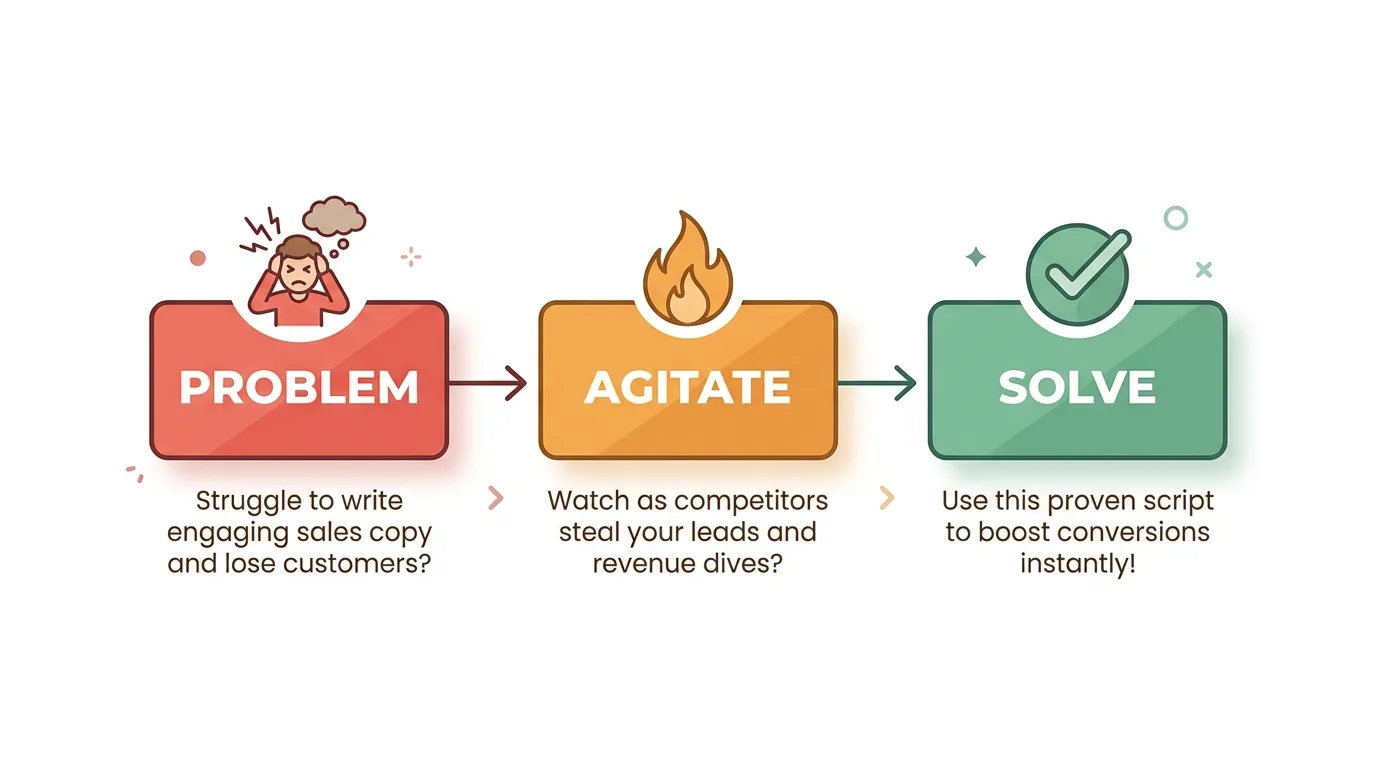
Your team ships late because tests break silently. Every delay costs you users — and their trust. AutoDeploy runs your full test suite before every push, catching failures before production.
Audience has an active, felt pain point. Works best when the problem is universal.
BAB
Before, After, Bridge
Right now, deploys take 45 minutes and break on Fridays. Imagine shipping 10x a day with zero rollbacks. AutoDeploy is the bridge — zero-config CI that just works.
Audience needs to see transformation. Good for awareness campaigns.
AIDA
Attention, Interest, Desire, Action
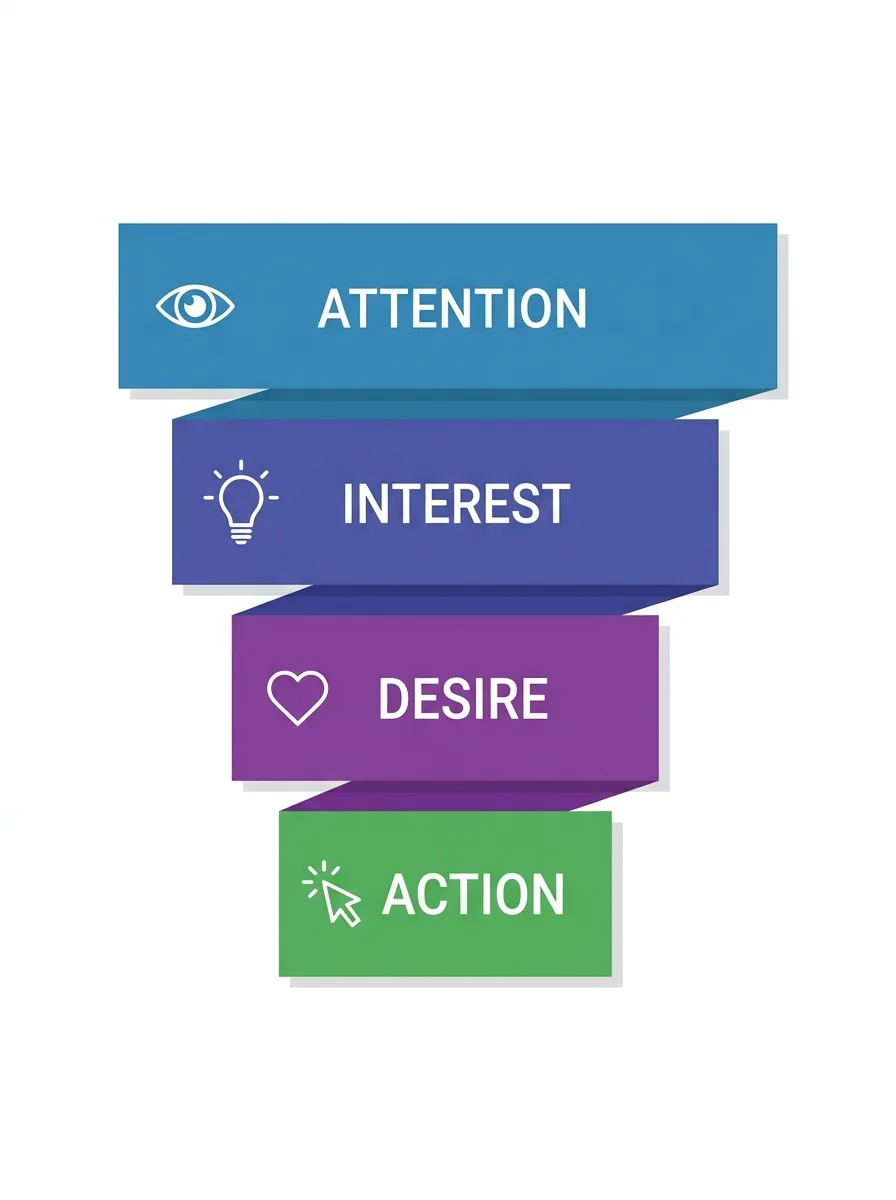
What if deploys never broke? Our pipeline catches 99.2% of regressions before production. Join 5,000+ teams sleeping better at night. Start free today.
Full-funnel campaigns. Each phase can be a sentence. The CTA is the climax, not an afterthought.
CTA Patterns
Where copy becomes revenue
Three rules for every CTA
Verb first. Remove friction. Be specific about what happens after the click. A weak CTA wastes everything that came before it.
Remove friction in the CTA itself. Say what happens after the click.
Time estimates reduce perceived commitment. Specificity beats vagueness.
‘My’ creates ownership. ‘Submit’ sounds like a form, not a benefit.
Concrete next step beats an abstract one. Time commitment is known.
Platform-Specific Copy
Write for the context, not just the product
Copy that works on Meta fails on Google. Character limits, visible text, and user intent differ per platform. Same message, different execution.
Google Display
30 chars max. No brand name — the logo carries it. Lead with benefit or number.
90 chars max. One idea per ad. No room for PAS structure — go straight to outcome.
15 chars. Verb-first: Start, Get, Try, See. Never ‘Click Here’.
Meta (Facebook / Instagram)
40 chars. Can be longer but truncates. Front-load the hook — first 5 words matter most.
125 chars visible, 2200 max. The first line is your ad — everything after ‘See More’ is optional.
Use platform CTA buttons (Shop Now, Learn More). Custom CTAs in the body copy.
70 chars recommended. Professional tone but not corporate. Specifics over buzzwords.
150 chars visible in feed. Lead with industry pain points. Avoid marketing-speak — this audience sees through it.
Respect the B2B buyer cycle. ‘Download the Report’ beats ‘Buy Now’.
The Checklist
Run through these before publishing any ad