A/B Testing
Your Angles
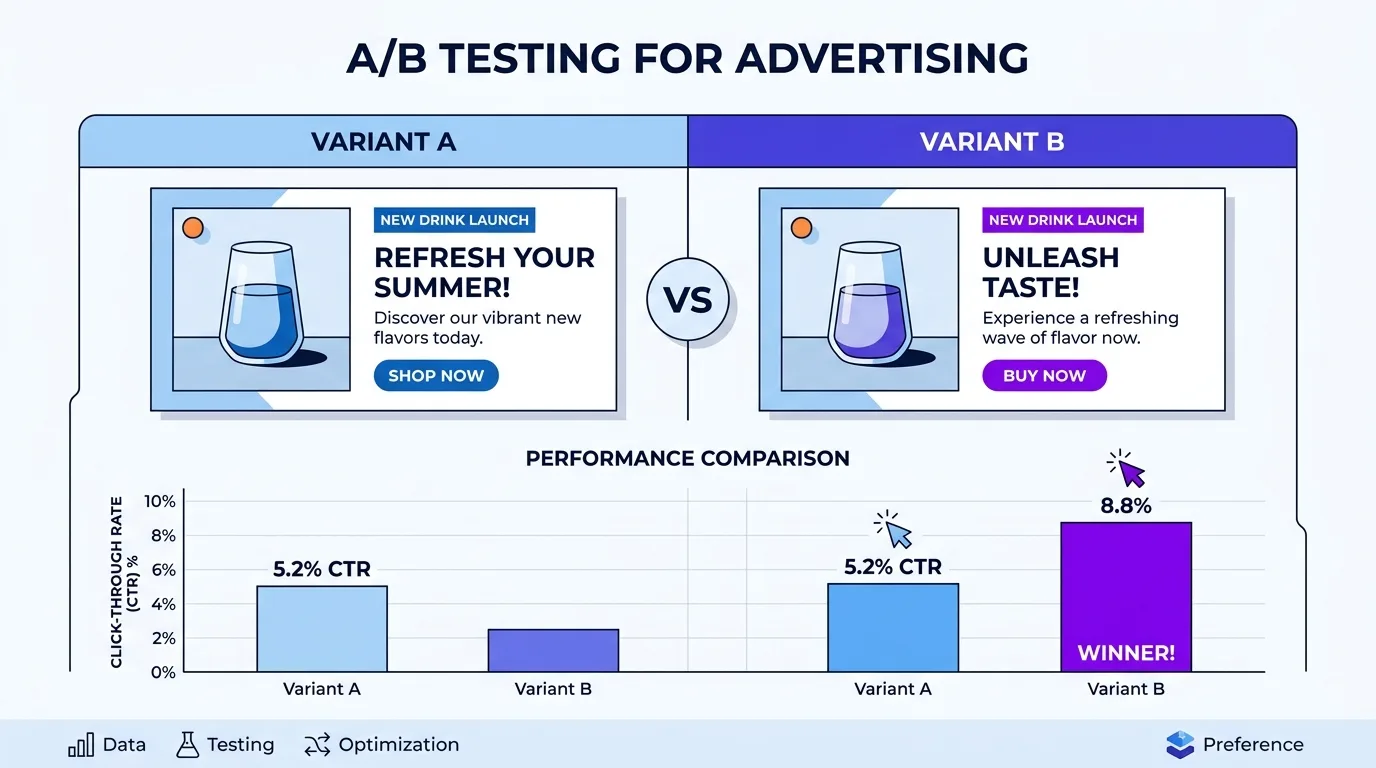
The angle is the single biggest lever in ad performance. Same product, same audience, different angle — and you can see 3-5x variation in click-through rate.
The Five Angles
Every ad argues from one of these positions
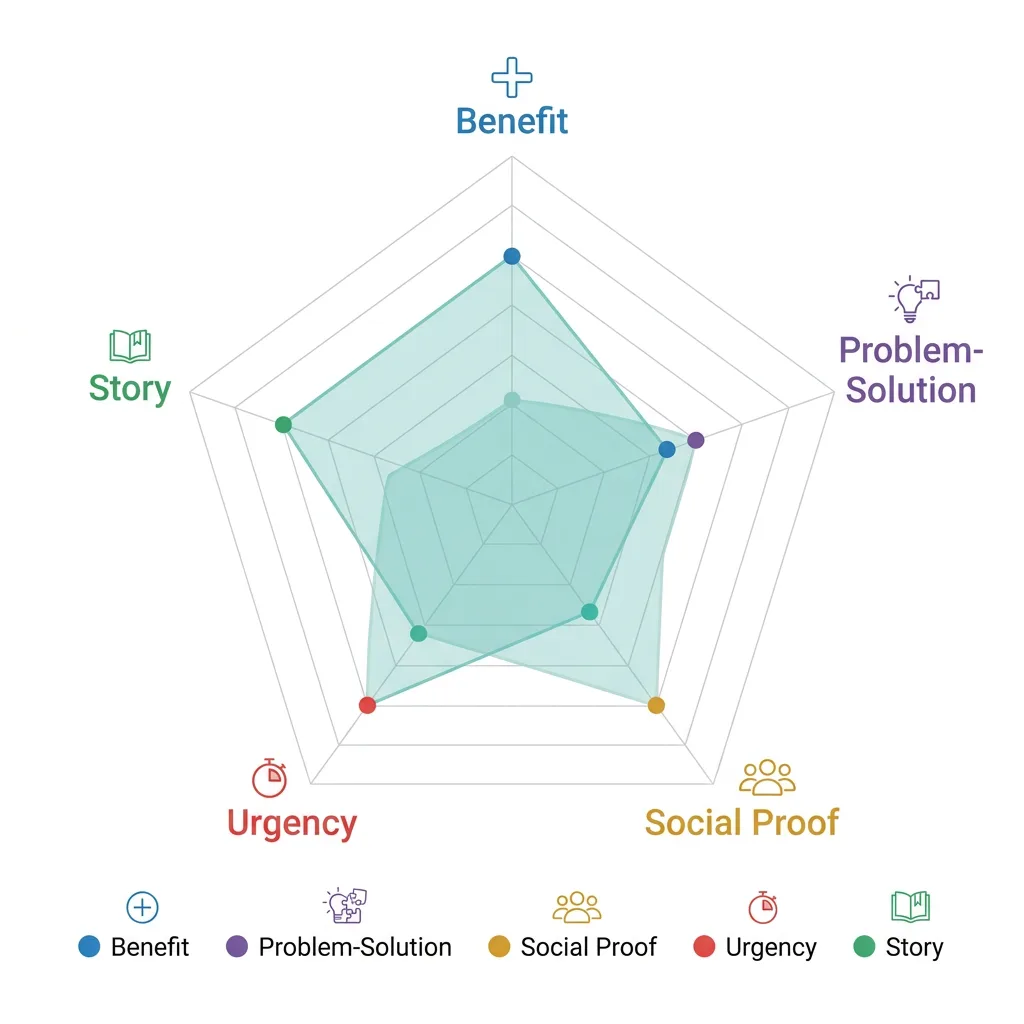
Every brand has a different angle profile. A SaaS product with strong social proof and clear benefits will lean heavily into those two axes. A new startup without proof will need to lead with problem-solution or story.
The goal isn't to use all five — it's to find the two that hit hardest for your audience and test them against each other.
Benefit
Lead with the outcome the customer gets.
Ship 10x faster. Deploy with one click.
Product has clear, measurable advantages. The audience already knows the category.
Generic if everyone claims the same benefit. Needs specifics — numbers, timeframes, comparisons.
Problem-Solution
Name the pain, then position your product as the fix.
Tired of broken deploys? AutoDeploy catches failures before production.
Audience is actively experiencing a known pain point. Works best with a clear ‘enemy’.
If the problem isn’t felt strongly, you’re reminding people of nothing.
Social Proof
Show that others trust you — numbers, logos, testimonials.
Trusted by 5,000+ engineering teams. Rated 4.9 on G2.
You have real proof. Early-stage companies faking social proof get ignored.
Weak proof is worse than no proof. ‘10 happy customers’ doesn’t move anyone.
Urgency
Create time pressure to convert now instead of later.
Free for the first 500 teams. Offer ends Friday.
You have a real deadline or scarcity. Works well for launches and promos.
Fake urgency trains your audience to ignore you. Use sparingly and honestly.
Story
Tell a narrative — founder origin, customer transformation, mission.
We built this because our team lost a week to a bad deploy.
Brand has an authentic origin story. Works for differentiation in crowded markets.
Story without a point is just content. Must connect back to what you sell.
How to Structure a Test
Five steps from hypothesis to winner
Pick Two Angles
Don’t test five things at once. Pick the two most different angles — maximum learning, minimum spend.
Same Everything Else
Same image, same CTA, same targeting, same budget. Only the copy angle changes. One variable per test.
Set Success Metrics First
CTR tells you about the hook. Conversion rate tells you about the offer. Decide which matters before you launch.
Run Until Significant
Minimum 100 clicks per variant for CTR. Minimum 30 conversions per variant for conversion rate. Don’t call it early.
Kill and Scale
When you have a winner, kill the loser. Don’t ‘keep running both’ — you’re wasting budget proving what you already know.
The minimum viable test
100 clicks per variant for CTR comparison. 30 conversions per variant for conversion rate. Anything less and you're reading noise, not signal.
By Industry
What works where — and what to avoid
SaaS / B2B
Pure urgency — B2B buyers aren’t impulse-buying. Social proof works if you have logos they recognize.
E-commerce
Story angle rarely converts cold traffic. Lead with offer, prove with reviews.
Agency / Services
Benefit claims without proof — every agency says ‘we drive results’. Show the case study.
Local Business
Overcomplicating. Your audience is nearby and ready to buy — make the offer clear.
Reading Results Without Fooling Yourself
Four mistakes that cost real money
CTR is about the hook, not the product.
A high CTR with low conversion means your ad promises something the landing page doesn't deliver. Fix the alignment, not the ad.
Small sample sizes lie.
If variant A got 12 clicks and variant B got 8, you know nothing. Wait for statistical significance or you're just reading noise.
Don't optimize for the wrong metric.
A "winning" ad with high CTR but negative ROAS is a losing ad. Track the metric that pays your bills.
The angle that wins on Meta might lose on Google.
Platform context changes everything. An urgency headline works in a scrolling feed. A benefit headline works in search where intent exists.